Qualified
Words and photos by Sarah Milligan

“Jo-Anne, would you please stop taking your goggles off!”
I turned away from her, pushing against the current as yet another choppy wave flooded my nose and worried the water around us. Tessa was a few strokes ahead, defending the distance she had covered against the currents that were determined to pull us back to the north side of the island. Having grown up near the ocean, she was a strong swimmer, but her arms rose sloppily out of the water and slapped down again in a mechanically lazy way. She stopped abruptly, jerking her head out of the water to take stock of the situation.
Jo-Anne was putting on her goggles again and we were waiting for her. “Every time you stop, we get pushed back to where we started!” Tessa yelled in her general direction as water splashed against the back of her head, creating a brief halo of spray. The droplets winked the reflected sunlight as they joined the ocean again. It reminded me of hours spent bobbing on boogie boards as children, waiting for that moment of collision where the wave connects with our stationary bodies. The momentum of the wave against our rigid forms would create a momentarily frozen halo before sweeping us along. Now, instead of ushering us to shore, these crests sloshed us around tirelessly.
We had spent the morning methodically collecting sprouted coconut seedlings in oppressive heat. Synonymous with tropical getaways and dreamy resorts, the palm trees grew easily in the humidity and had invaded the entire island. In an attempt to erase the island’s stubborn coconut plantation history, the conservation interns were sent out with machetes to destroy the sprouting seedlings. In defiance, these seedlings littered the ground in a quantity-over-quality evolutionary scheme. Given the size of the island, and only three of us as interns, it had felt like an intentionally pointless activity.
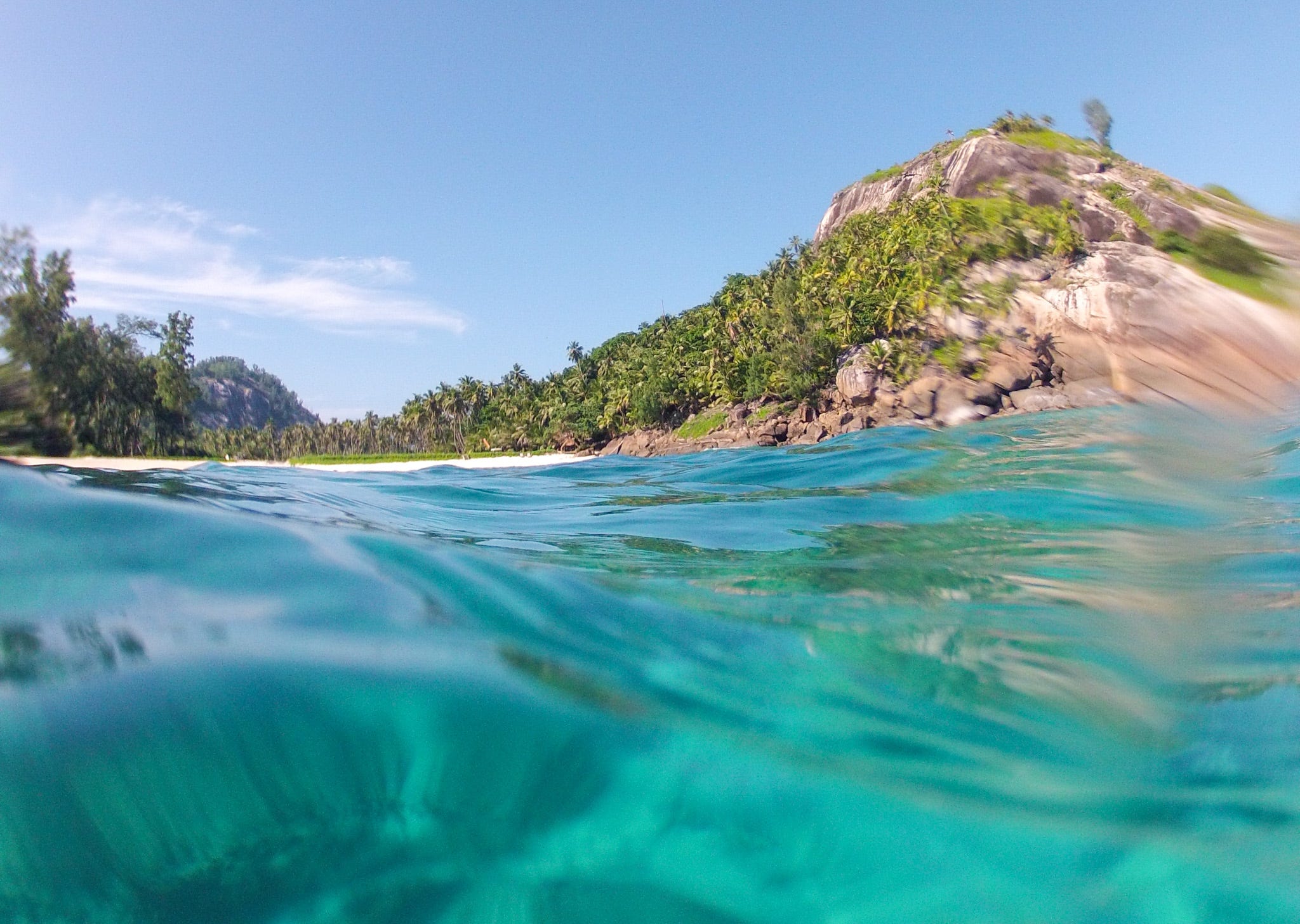
The sun beamed cheerfully above us and I could just see our target finish line, the white sand beach, peeking out from around the corner of the cliff. Turning back wasn’t an option. A fishing dinghy had dropped us off in prime snorkeling territory near the cliff. The warm water slapped against itself, rising in peaks that looked deceptively manageable from the dinghy. We would swim around the cliff promontory back to shore where a road would lead us back to the interns’ accommodation. Angel and Jude, locals to the island, had suggested this swim as a quick excursion to get to know the waters on our afternoon off: “A really beautiful swim!”.
I waited for Jo-Anne to catch up. Our afternoon “joy swim” was turning into another decidedly pointless exertion. The chop slapped my face, the currents tugged my feet, and my body rose and fell as my legs pumped rhythmically to keep me floating upright. I knew Tessa and I could have rounded the corner of the cliff by now. We could have been swimming in the calm waters off the Island’s protected beach enjoying the rest of our afternoon off. The invasive palm trees lining the beach beckoned us, their fronds waving in exaggerated, sarcastic snaps: “Enjoying yourselves?”
At the end of this internship, we would leave the island with tangible skills to buff out our resumes: GPS tracking, marine surveys, bird population monitoring. We might even get ourselves hired because of the competency that these words promised: Conservationist. Here to save the environment.
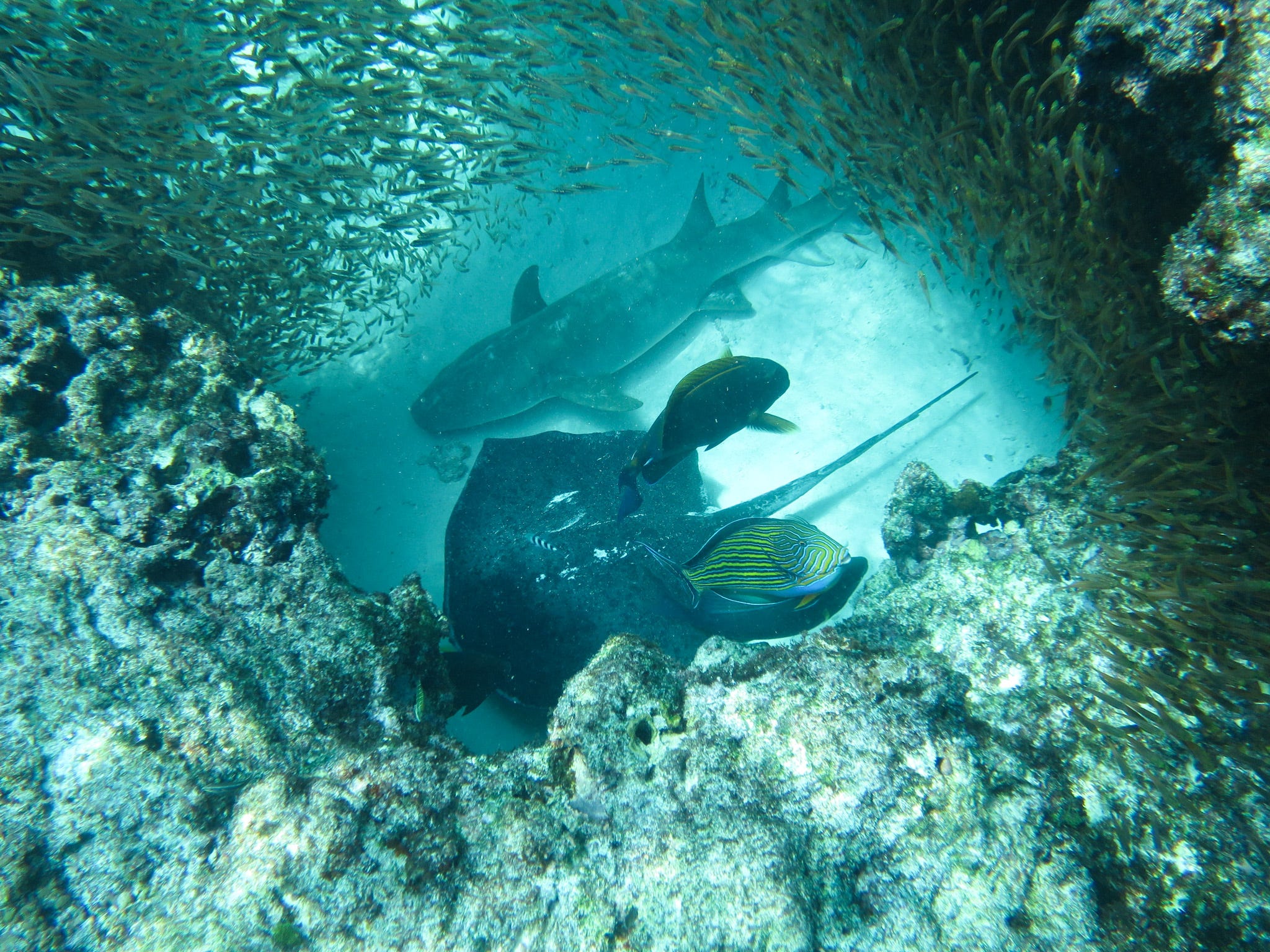
As I dropped my head face down into the water, I searched the cave on the ocean floor for the nurse shark we had seen yesterday. Besides a few familiar species, this ocean landscape was still foreign to me after a few weeks on the island. A large stingray was now settled at the bottom of the cave, blending in with the sand and murk of the tumultuous waters. I was jealous of the lounging creature, soothed by the meditative rhythm of the swelling waters. I took another few strokes against the current, letting my movements synchronize with the swell of the chop around me. Every few seconds, I was jerked out of sync by counter swells that rolled and rioted around me. Turning my head to grab another breath of air, my mouth filled with seawater.
Sometimes, while conducting bird surveys or doing beach patrols, we’d pass by Angel, a resident of the island for many years, and he’d invite us in to see baby bats he’d been rehabilitating or pictures of rare birds he’d climbed the cliffs to find. Angel was in charge of keeping the pools clean at the luxury resort on the island, but the creases around his eyes sprang to life when you got him talking about the island’s nonhuman inhabitants. He had a reverence and deep knowledge that comes with years of quiet and dedicated observation. And he never tired of it because he loved doing it, not because it needed to be done.
“What if we die of exhaustion out here”, I thought as I stopped to watch Jo-Anne struggling to coordinate her swim strokes. We thrashed about as we struggled to keep tabs on each other and coax Jo-Anne forward. I’m sure our silhouettes looked like appetizing morsels to any lingering sharks. I could almost feel the stingray watching us with sleepy amusement. Swimming in choppy water is hard, but hanging out trying to stay afloat in choppy water defies all sensibilities. We probably shouldn’t have been in the water this afternoon, but after a time we had lost our careful judgement. The rhythms of the island’s tides and winds had yet to settle into instinct and instead seemed random, unpredictable.
Skittish fish scuttled by on their afternoon commute, too busy doing fish things to take any notice of us. I tried to commit their profiles to memory, but I knew that as soon as I opened the fish identification guide, they’d all start to look the same. Part of our jobs as interns was to carry forward years of documentation of marine species found in the waters surrounding the island. This extensive report would ideally inform the need to create a marine sanctuary in order to protect the unique and sensitive species of the area. I hoped the skittish fish I’d seen weren’t important ones.
Jude was the resort's boating and fishing guide. Spending more time in water than on land, he toured tourists and caught desirable fish for their dinners. Lively and full of pranks, he’d rarely carry a serious conversation, but he knew the waters around the island best. He took us down to the cove our first day on the island to show us the rays leaping out of the water as the sun melted at the horizon and spilled orange into the cove. The leaping rays flung themselves out of the water with gusto, briefly flying above the calm waters in pairs and groups. Their silhouettes were magically unfamiliar, effortlessly gliding through water and air.
A wave slapped me in the face and washed a final surge of determination over me: “We are so close, let’s not stop until we reach the beach! Come on Jo-Anne!” We pulled ourselves through the water, rounding the cliff corner into the protection of its shoulder. With breaking waves surrounding us, the strongest current was the one pulling us to shore. We let the waves push us in chaotic whitewater toward the sandy shelf where we could stand. Shakily, I trudged towards the beckoning palm trees and laughed nervously when I caught Tessa’s eye.
“The salt water here tastes different”, was all I could say.
Tessa slowed her walk up the sand bank and I could see her moving her tongue around her mouth, “It’s sweeter than the ocean at home, isn’t it? How strange”.
The island winked in the sun, carrying on as usual.